
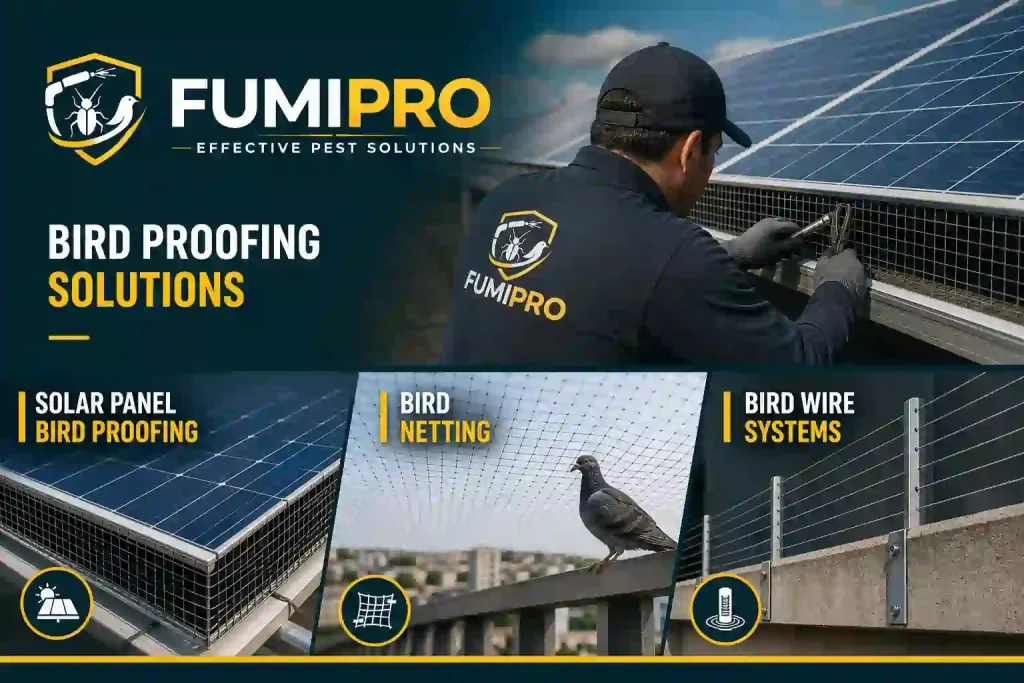
Investing in a solar system is one of the smartest financial moves a Johannesburg homeowner can make to beat load shedding and rising electricity costs. But once those sleek, black panels are mounted on your roof, they inadvertently create another piece of prime real estate: a luxury, five-star hotel for urban pigeons.
If you have noticed an influx of birds cooing on your roof, or if your solar generation numbers have taken a mysterious dip, you are likely dealing with a nesting problem.
Finding an effective solution for solar panel bird proofing in Johannesburg is crucial to protecting your clean energy investment. Left unchecked, a small flock can quickly cause thousands of Rands in structural and electrical damage.
The Perfect Microenvironment: How Pigeons Nest Under Panels
Pigeons are incredibly resourceful urban survivalists. The gap between your solar panels and your roof tiles typically measures between 10 to 15 centimeters. To a pigeon, this void is the perfect sanctuary.
It provides excellent shelter from the harsh Highveld weather including our severe summer thunderstorms and freezing winter nights. Even better for the birds, the operational warmth generated by the solar panels keeps the space cozy year-round, while the physical panels shield them from aerial predators like hawks and owls.
Once a breeding pair establishes a nest under your array, they don’t leave. Pigeons breed continuously throughout the year, meaning a minor inconvenience in spring can grow into a massive, multi-generational colony by winter.
The Costly Reality of Pigeon Damage to Solar Panels
While a few cooing birds might seem harmless at first, the actual physical and financial impact of an unprotected solar array is substantial.
1. Wiring Destruction and Fire Hazards
Pigeons don’t just sit under the panels; they actively build nests using twigs, dried grass, and debris. As they scratch around and compress this material into the tight space, they pull at exposed DC cables, strip insulation, and dislodge vital electrical connectors. Exposed wiring combined with highly flammable, dry nesting material creates a serious short-circuit and fire risk right on your roof.
2. Corrosive Bird Droppings (Guano)
Pigeon droppings are highly acidic due to high levels of uric acid. When guano accumulates under the array, it etches into the aluminum panel frames and can accelerate the degradation of your roof tiles or waterproofing membrane. When it piles up on top of the panels, it creates “hotspots” that permanently damage the photovoltaic cells and dramatically drop your energy output.
3. Blocked Gutters and Severe Odours
As Highveld downpours hit your roof, loose nesting material, feathers, and droppings are washed straight into your gutter system. This leads to severe blockages, overflowing gutters, and structural water damage along your fascia boards. Additionally, the smell of baking bird waste under a hot midday sun can make opening your upstairs windows unbearable.
The Solution: How Solar Panel Bird Mesh Works
The most reliable, humane, and aesthetically clean way to solve this issue is the installation of specialized solar panel bird mesh.
This system creates a complete physical barrier around the entire perimeter of your solar array, running securely from the top edge of the panel frame straight down to your roof tiles. The mesh gaps are small enough to deny entry to pigeons, starlings, and mice, but perfectly sized to ensure that natural airflow continues beneath the panels—which is essential to prevent the system from overheating and losing efficiency.
No Drilling, No Voided Warranties
A major concern for Johannesburg homeowners is whether bird proofing will void their expensive solar manufacturer warranties.
Professional installers use specialized, UV-stabilized nylon or stainless steel clips that lock tightly onto the inner lip of the solar panel frame. There is absolutely no drilling into the panels or the roof structure. The mesh is held under perfect tension without compromising the integrity or the warranty of your system.
Cost vs. Long-Term Saving: Is It Worth It?
When weighing the upfront cost of professional bird proofing against potential long-term expenses, the math is straightforward.
| Factor | Unprotected System | Mesh Protected System |
| Energy Efficiency | Drops by 10% to 30% due to heavy guano shading. | Operates at peak efficiency year-round. |
| Repair Costs | High risk of expensive rewiring and roof leak repairs. | Zero risk of wildlife-related component damage. |
| Maintenance | Requires frequent, hazardous manual roof scrubbing. | Set-and-forget solution with minimal annual checks. |
| Warranty Safety | Damaged wires or self-drilling can void coverage. | Non-invasive clip systems keep warranties 100% intact. |
Cleaning out an established colony after the fact is always more expensive than preventative proofing. A professional installation includes removing old nests, sanitizing the toxic droppings, repairing any minor wire chafing, and sealing the boundary permanently.
Safeguard Your Clean Energy Investment
Your solar panels are meant to save you money, not introduce unexpected repair bills. If you are hearing scraping noises on your roof or noticing an accumulation of white droppings across your property, it’s time to act.
Don’t wait for a nest of twigs to compromise your electrical system. Book a professional solar panel bird proofing Johannesburg inspection today to clear your roof and ensure your system continues to run safely and efficiently.