
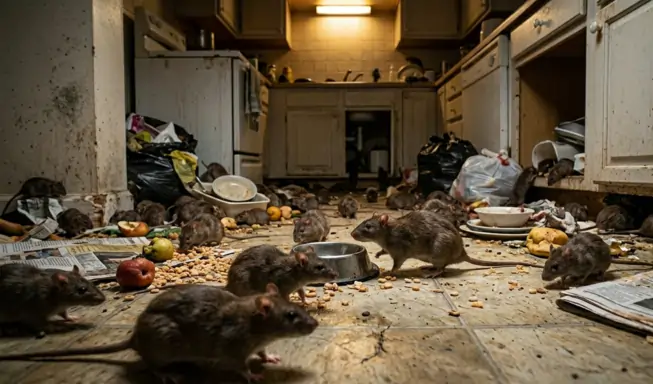
It’s 2 AM, the house is dead quiet, and then you hear it: a distinct, rhythmic scratching sound right above your bed. If you live in Gauteng, you already know this isn’t a ghost. Dealing with rats in the ceiling in Johannesburg is an incredibly common winter headache, but it’s one you need to act on immediately before it turns into an expensive disaster.
When rodents move into your roof, they don’t just sleep there. They chew through electrical wiring (a major fire hazard), destroy your insulation, and leave behind droppings that pose serious health risks.
Here is exactly how to identify a problem with rats in the ceiling in Johannesburg, why your first instinct to use supermarket poison might backfire, and what a professional rodent control JHB program actually looks like.
How to Tell If You Have Rats in Your Ceiling
Rodents are nocturnal, meaning you’ll usually hear or see the evidence of their late-night activities long before you catch a glimpse of the actual culprits. Look out for these four signs:
- Scratching and Scurrying: Loud scratching, thumping, or squeaking noises coming from the ceiling boards, especially between dusk and dawn.
- Droppings in the Attic or Cupboards: Roof rat droppings are dark, cylindrical, and roughly the size of a coffee bean. You might find them near your geyser or electrical hubs.
- Foul Odours: A sudden, stale, ammonia-like smell wafting down from your roof space or light fixtures.
- Chewed Materials: Damaged cardboard boxes stored in the loft, chewed plastic pipes, or frayed electrical wires.
Why DIY Rat Poison is Risky for Johannesburg Homes
When homeowners first hear that scratching overhead, the automatic response is often to run to the local supermarket, buy a box of chemical rat poison, and toss it into the crawl space. While this seems easy, it comes with major risks.
The “Dead Rat Smell” Nightmare
Commercial poisons take a few days to work. A rat doesn’t gracefully exit your house to die outside; it will crawl into the deepest, most unreachable corner of your roof boards or drywall to die. Within days, a horrific, nauseating smell will fill your home, often requiring you to cut open your ceiling just to find and remove the carcass.
Secondary Poisoning of Pets and Wildlife
Johannesburg is home to beautiful local wildlife like spotted eagle-owls, mongooses, and genets—all of which naturally hunt rodents. If a neighbor’s cat or a local owl eats a rat that has ingested slow-acting chemical bait, they will get poisoned too. Furthermore, if your dogs or cats get a hold of the bait or the disoriented rodent, it can lead to tragic vet emergencies.
What Does a Professional Rodent Control JHB Programme Involve?
Eradicating a roof rat population requires a strategic, multi-step process rather than a single quick fix. If you hire a professional pest control team in Johannesburg, their program generally follows these steps:
1. Detailed Inspection
The technician will locate the specific nesting areas, identify whether you are dealing with House Rats (Rattus rattus) or Norway Rats, and map out their main travel routes along your beams.
2. Strategic Trapping and Tamper-Proof Baiting
Instead of loose poison, professionals use locked, tamper-proof bait stations and heavy-duty mechanical snap traps. These are placed strategically along known rodent pathways in the ceiling where pets and children cannot access them.
3. Follow-Up and Clean Out
An effective program always includes a follow-up visit a week or two later to check the traps, clear away any carcasses safely, monitor the bait consumption, and ensure the entire colony has been eradicated.
Entry Proofing: How to Keep Rats Out for Good
Once your ceiling is clear, you have to seal the property. If you don’t fix the structural entry points, a new family of rodents will simply move into the vacant space next season.
Because Johannesburg homes often feature tiled roofs, open eaves, and complex brickwork, rats find plenty of tiny gaps to squeeze through. Remember, a young rat can fit through a hole the size of a marble.
- Seal the Roof Line: Install fascia boards securely and block the gaps under curved roof tiles using specialized wire mesh or concrete eave fillers.
- Cut Back Overhanging Trees: Roof rats are incredible climbers. If you have branches touching your gutters or hanging over your roof, they act as a direct highway onto your house. Trim branches back at least 2 meters from the roofline.
- Block Utility Entry Points: Check where air conditioning pipes, solar panel wiring, and outdoor plumbing enter your walls. Seal these gaps using heavy-duty steel wool mixed with outdoor gap filler, as rats cannot chew through steel wire.
Don’t Wait for the Damage to Get Worse
Ignoring a rodent problem won’t make it go away. The longer you let rats nest in your roof, the more damage they will cause to your home’s structural integrity and electrical systems.
Get a Professional Assessment: If you suspect you have a rodent infestation, contact a certified, eco-conscious professional for rodent control JHB services today to safeguard your home, family, and pets.